

Commercial Kitchens Are Going Electric - Here's What You Need to Know
Gas is on its way out of commercial kitchens. A coalition of major property developers and chefs - including Lendlease, Grosvenor Property UK, and names like Simon Rogan and Skye Gyngell - have committed to installing induction cookers in all new kitchens by 2030 and retrofitting existing ones by 2040.
This isn't just about sustainability targets. The health case is hard to ignore. Research shows children living in homes with gas cooking have a 42% increased risk of developing asthma. In the UK, around 11.5% of childhood asthma cases could be prevented by removing gas cooking altogether. When you're running a commercial kitchen with staff working eight-hour shifts over open gas flames, that exposure adds up.
Why businesses are making the switch
We're seeing more clients move to electric for practical reasons. Gas prices have been all over the place, and that unpredictability makes budgeting difficult. Electric gives you more stable costs and, as the grid gets greener, a lower carbon footprint without having to do anything extra.
Modern induction hobs are more efficient than gas equivalents. They put heat directly into the pan rather than heating the air around it, which means kitchens run cooler and more comfortably for staff. No gas leaks to worry about, no open flames. With major property developers now committed to phasing out gas, businesses switching now avoid being caught out later when landlords and clients start expecting electric as standard.




What we did at All Bar One, Houndsditch
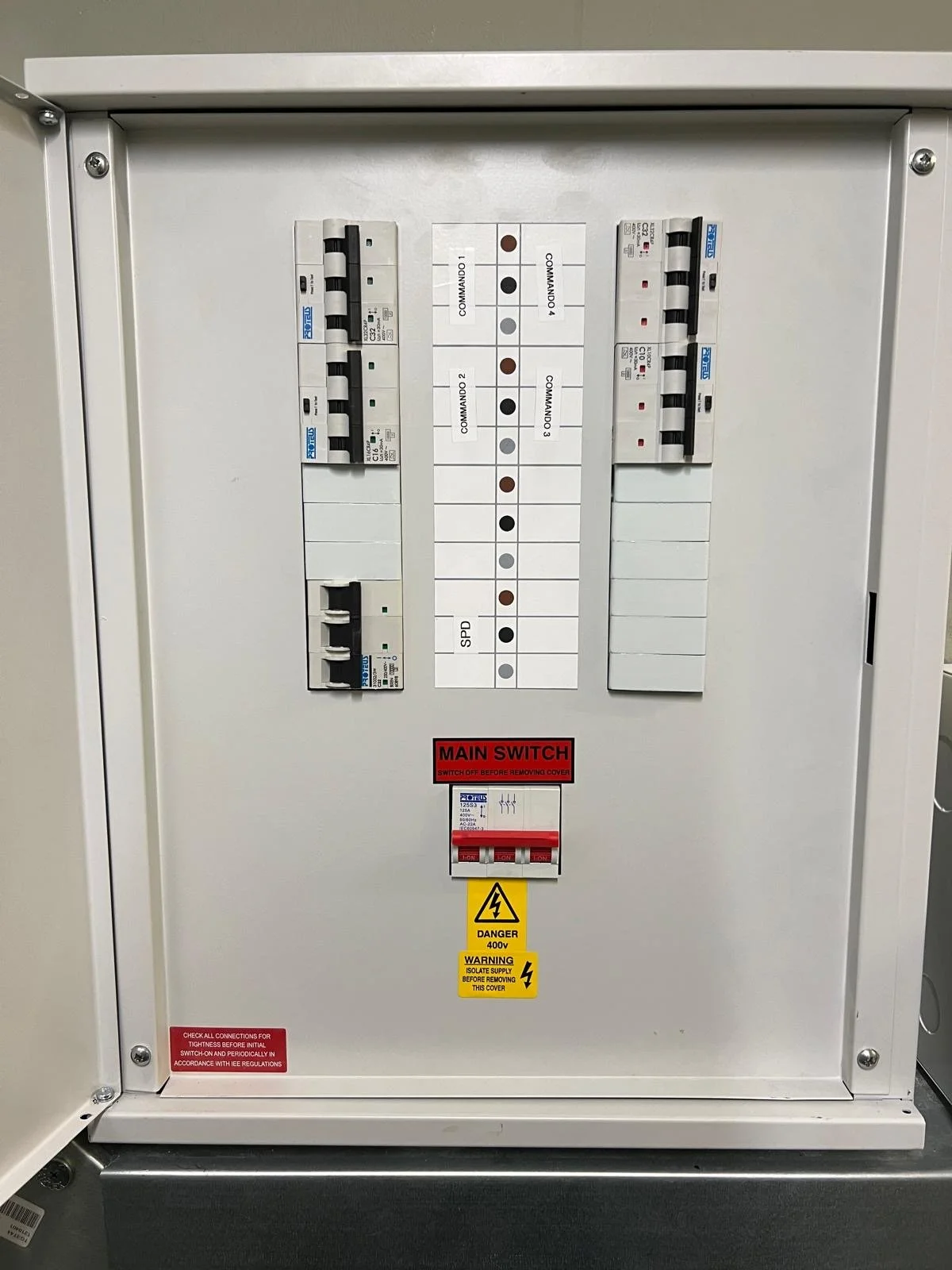
We recently completed a full electric kitchen installation for All Bar One in Houndsditch. The project involved replacing gas hobs with induction units, installing high-efficiency electric ovens and grills, and upgrading the electrical supply to handle the increased load. We also fitted an interlocking system on the kitchen canopy for automatic emergency shut-off.
Before any work started, our team carried out full electrical design and feasibility assessments. The building needed a new distribution system and additional circuits to support the equipment. This is common with older properties - the existing electrical infrastructure often wasn't designed for an all-electric kitchen.
The honest challenges
Switching to electric isn't cheap upfront. The equipment costs more, and many buildings need electrical upgrades before you can even think about installation. Chefs used to gas take time to adapt - induction responds differently, and techniques need adjusting. And while electricity pricing is more stable than gas, it's not always cheaper depending on your tariff and location.
For most businesses, a phased approach works best. Replace equipment as it reaches end of life rather than ripping everything out at once. Get an energy audit done so you know where you stand, and talk to your electrical contractor early about what your supply can handle.
Where this is heading
The UK's built environment accounts for 25% of national greenhouse gas emissions, and the sector is behind on its net-zero targets. Commercial kitchens are part of that picture. With major property developers now committed to phasing out gas, electric kitchens are becoming the standard rather than the exception.
If you're considering the switch, we can assess your site and talk you through what's involved. Give us a call on 0333 344 5949 or drop us an email.