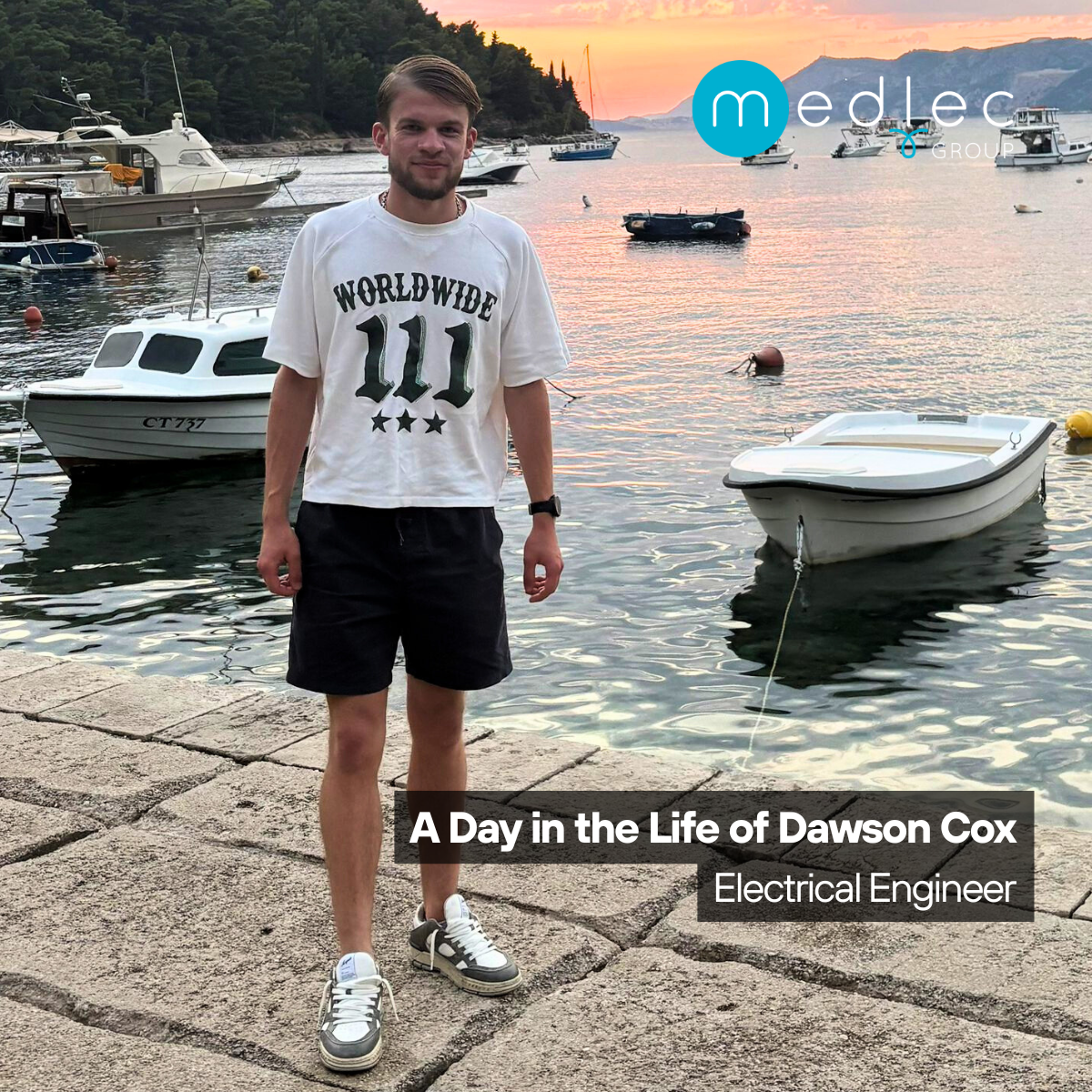
A Day In The Life: Dawson Cox, Electrical Engineer
Dawson Cox is up at 5am most mornings, heading into London before the traffic builds. As a qualified electrician at Medlec, he tackles everything from reactive maintenance to installation work. Starting as an apprentice straight out of school, he's now 22 and fully qualified - proving that hands-on learning and earning beats student debt any day.
What's your role at Medlec, and how long have you been with us?
I'm an electrician doing reactive maintenance and installation work. I've been with Medlec for about 4 years now, since I left school. I started as an apprentice and completed my qualifications here.
What drew you to working as an electrician?
I've always preferred practical work over classroom learning - getting stuck in and learning on the job suits me better. Electrical work gives you hands-on experience and technical knowledge. You're always busy when you've got a trade, and with everything going electric now - cars, heating systems - you're never going to be short of work.
Walk us through a typical day for you
I'm up around 5am, even at weekends. Then I'm straight out to wherever the jobs are that day. We cover a wide area - London, Brighton, Reading, all over really. There's quite a bit of driving involved, but I'm usually done by 3:30pm, which isn't bad - but then we have to drive home!
Jobs come through on our Job Watch system. The office loads them up, and you work through them. Could be anything - faulty sockets, lighting issues, emergency repairs. You never quite know what you're walking into until you get there.
What sort of jobs do you usually work on?
Mainly reactive maintenance. Someone reports their sockets aren't working or there's a lighting problem, and you need to diagnose and fix it. We do a lot of work in pubs and restaurants, which keeps things interesting - different sites, different challenges every day.
The tricky bit can be when the person who reported the fault isn't there when you arrive, so you're working from second-hand information. Part of the job is being a bit of a detective sometimes, working out exactly what the issue is.
What's the most challenging part of your job that people might not expect?
The communication side of things. When you're working on electrical installations, there's a lot of compliance and safety regulations involved. Something might be working, but if it's not safe or doesn't meet current standards, it needs to be sorted.
Explaining that to people isn't always straightforward - especially when they can see their lights are on and don't understand why there's still a problem. It's about helping them understand the safety side of things, why we need to fix issues even if everything seems fine on the surface.
How do you approach emergency callouts?
We run a rota for emergency callouts - you're on call for a week every eight to ten weeks or so. It can get busy, but I enjoy them. They're usually more involved jobs, and people really appreciate you turning up quickly to sort an urgent problem. When someone's got an electrical fault at 6am that's affecting their business, they're relieved to see you.
Which piece of kit couldn't you live without?
My voltage testers, definitely. They're essential for working safely. You can't see electricity, so without proper testing equipment, you're working blind - and that's dangerous.
What's the best thing about working with the Medlec team?
There's always a solution to problems. If a job needs finishing that day and something goes wrong - maybe we don't have the right parts - the team pulls together. The office will track down what we need, work out how to get it to site, and we'll sort it. There's a good attitude of getting things done.
We've also got apprentices coming through, which is good. You help them learn, and they give you a hand on bigger jobs.
How has the industry changed since you started?
I've only been qualified a few years, but you can already see the shift towards electrification. More electric vehicles, electric heating systems, and renewable energy installations. The work's evolving, which keeps it interesting.
What do you enjoy doing when you're not keeping buildings running smoothly?
Running mainly. I've done a few races and I'm training for the London Marathon - 26 miles, which should be interesting. It's not competitive or anything, just something to keep me active. Apart from that, the usual - meeting friends at the pub, listening to music.
What would you be doing if you weren't an electrician?
Probably something involving driving. Maybe lorry driving - something that gets you out on the road.
Any advice for someone looking to start in your field?
The apprenticeship route is brilliant. You're learning and earning at the same time - gaining real experience while getting qualified. I left school at 16, started with Medlec, and at 22 I'm fully qualified with no debt and a solid career ahead. You learn the trade properly, working alongside experienced electricians, and you're getting paid while you do it. Can't ask for better than that really!